
Microchip PIC18C452-I/L 8-Bit Microcontroller: Architecture, Features, and Application Design Considerations
The Microchip PIC18C452-I/L represents a significant member of the PIC18C family of 8-bit microcontrollers, engineered to deliver high computational performance while maintaining the power efficiency and design simplicity characteristic of the PIC architecture. Housed in a 44-pin PLCC package, this device is tailored for complex embedded applications requiring robust connectivity, substantial memory, and versatile peripheral integration.
Architectural Overview
At its core, the PIC18C452-I/L is built upon an enhanced Harvard architecture with a 16-bit wide instruction set. This design allows for simultaneous access to program and data memory, significantly boosting throughput. The CPU features a two-stage instruction pipeline, enabling most instructions to execute in a single cycle (except for program branches). The microcontroller operates at a maximum frequency of 40 MHz, translating to a 10 MIPs performance.
Its memory subsystem is a key strength. It includes 32 KB of flash program memory and 1.5 KB of RAM data memory, providing ample space for sophisticated application code and data handling. Furthermore, it is equipped with 256 bytes of EEPROM data memory, which is essential for storing critical non-volatile data such as configuration parameters and calibration constants without requiring an external memory chip.
Key Features and Peripheral Integration
The PIC18C452-I/L is distinguished by its rich set of integrated peripherals, making it a highly self-contained system-on-chip solution.
Analog-to-Digital Converter (ADC): It incorporates a 10-bit ADC module with up to 8 input channels, enabling precise measurement and interfacing with a wide array of analog sensors.
Communication Interfaces: The device supports multiple standard serial communication protocols. It features a Master Synchronous Serial Port (MSSP) module that can be configured for either SPI or I²C communication, and a Universal Synchronous Asynchronous Receiver Transmitter (USART) for RS-232/485 communications.
Timers and Capture/Compare/PWM: With four timers (including a 16-bit timer with prescaler) and a Capture/Compare/PWM (CCP) module, the microcontroller is adept at tasks requiring precise timing, event capture, and pulse width modulation—a critical function for motor control and power regulation.
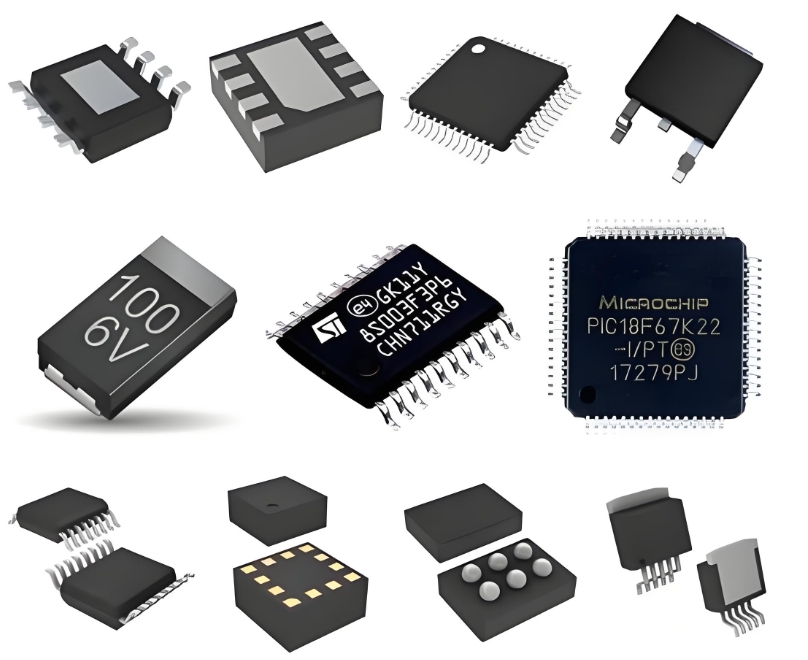
I/O Ports and Interrupts: It offers 33 I/O pins, many of which are multiplexed with peripheral functions. The robust interrupt structure supports both high and low-priority levels, allowing the processor to manage multiple real-time events efficiently.
Application Design Considerations
When designing a system around the PIC18C452-I/L, several factors must be carefully considered to ensure optimal performance and reliability.
1. Power Supply and Decoupling: A stable and clean power supply is paramount. Proper decoupling using 0.1 µF ceramic capacitors placed as close as possible to the VDD and VSS pins is essential to suppress noise and voltage spikes, especially during rapid digital switching.
2. Clock Source Selection: The choice between a crystal oscillator, ceramic resonator, or external clock source depends on the application's required precision and cost constraints. For timing-critical applications, a crystal oscillator is recommended for its superior accuracy.
3. Analog Design: When using the ADC, special attention must be paid to the analog reference voltages and PCB layout. A dedicated analog ground plane and careful routing of analog signals away from high-speed digital traces are necessary to minimize noise and ensure accurate conversions.
4. In-Circuit Serial Programming (ICSP): The ICSP header should be integrated into the PCB layout. This allows for firmware updates and debugging without removing the microcontroller from the circuit, drastically simplifying development and field upgrades.
5. Thermal Management: While the device is CMOS-based and generally power-efficient, driving high-current loads from I/O pins or operating at maximum frequency can generate heat. Ensuring adequate airflow or, in extreme cases, implementing a heatsink might be necessary for long-term reliability.
The PIC18C452-I/L stands as a powerful and versatile 8-bit microcontroller solution. Its balanced architecture, combining substantial memory, a rich peripheral set, and high performance, makes it an excellent choice for a broad spectrum of embedded systems, including industrial control, automotive systems, advanced sensor nodes, and complex consumer electronics. Careful attention to power, clocking, and analog design is key to unlocking its full potential in any application.
Keywords: PIC18C452-I/L, Harvard Architecture, 10-bit ADC, Peripheral Integration, In-Circuit Serial Programming (ICSP)

